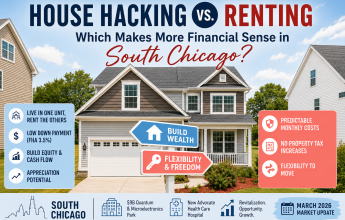
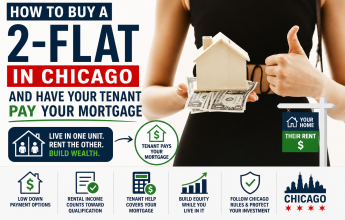
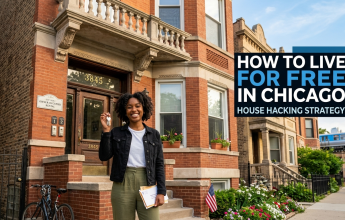
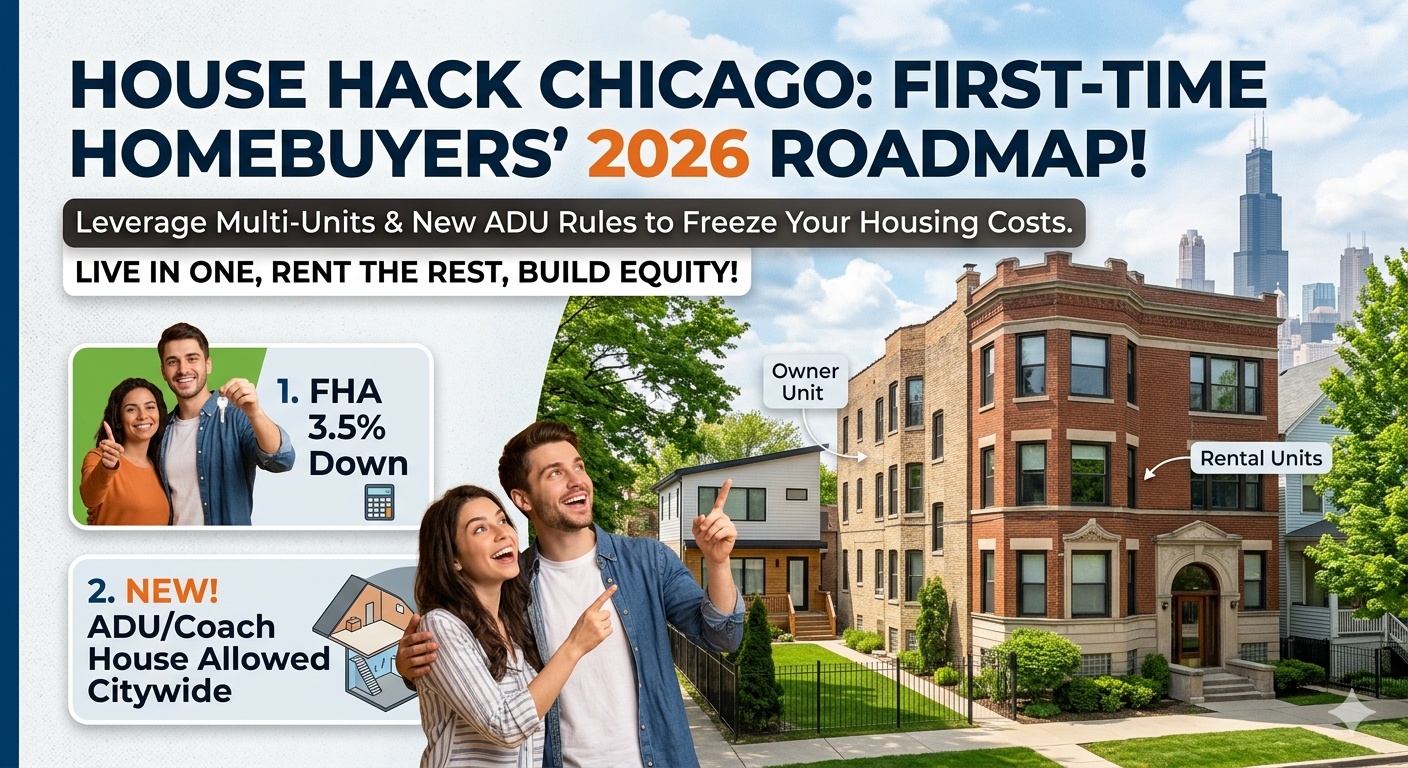
House hacking—buying a multi-unit property, living in one unit, and renting out the others—remains one of the most effective ways to break into the Chicago real estate market.
As of March 2026, the strategy has shifted from “get rich quick” to a “long-term affordability” play. With interest rates stabilizing and Chicago home prices continuing a steady climb, here is the updated roadmap for first-time buyers looking to house hack in the Windy City.
1. The 2026 Financial Toolkit
The biggest hurdle for first-time buyers is the down payment. In 2026, several refreshed programs are specifically designed to help:
- FHA 3.5% Down: For 2–4 unit properties, the FHA remains the gold standard. As of 2026, the loan limits for Cook County have been adjusted to reflect rising costs:
- Duplex: $693,050
- Triplex: $837,700
- Four-plex: $1,041,125
- FHLBank Chicago “Downpayment Plus”: Launched in January 2026, this program offers up to $10,000 in forgivable grants for income-eligible buyers.
- IHDA Access Forgivable: The Illinois Housing Development Authority (IHDA) offers up to $15,000 in assistance that is forgiven over time, provided you stay in the home as your primary residence.
2. The ADU Expansion: A 2026 Game Changer
Starting April 1, 2026, Chicago’s Additional Dwelling Unit (ADU) ordinance goes citywide. This is a massive win for house hackers.
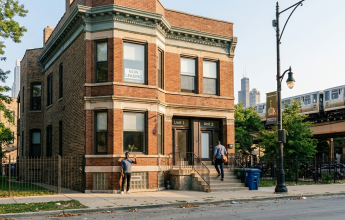
- The Play: You can now buy a standard 2-flat and legally convert the basement or attic into a third unit, or build a “coach house” in the backyard.
- The Benefit: This allows you to increase your rental income without the high price tag of a traditional 3-unit building. In many multifamily zones, these are now allowed “by-right,” meaning you don’t need a special zoning change.
3. Focus Neighborhood: South Chicago
While North Side neighborhoods offer high appreciation, South Chicago is currently the “cash flow” king. Here, the “Rent-to-Price” ratio still strongly favors the buyer.
The Numbers (Estimated March 2026): | Metric | Estimated Value | | :— | :— | | Average 2-Flat Purchase Price | $215,000 | | Down Payment (FHA 3.5%) | $7,525 | | Total Monthly Mortgage (PITI) | $1,850 | | Average Rent (Unit 2) | $1,350 | | Your Net Monthly Housing Cost | $500 |
By buying in South Chicago, you are effectively living in a full 2-bedroom apartment for $500 a month—far less than the $1,300+ you would pay in rent elsewhere. Plus, you’re positioned near the “halo effect” of the nearby Obama Presidential Center.
4. The 2026 Reality Check
In today’s market, lenders are more rigorous. They no longer allow you to rely solely on “projected” rents to qualify for a loan.
- The 75% Rule: Most lenders will only count 75% of the potential rental income toward your debt-to-income (DTI) ratio.
- Owner-Occupancy: To secure low down payment rates, you must live in the property for at least 12 months.
The Bottom Line
House hacking in 2026 isn’t about living for free overnight; it’s about using the city’s unique multi-unit inventory and new ADU rules to freeze your housing costs. You build equity while your tenants help pay down your debt.



 © 2026 Midwest Real Estate Data, LLC (MRED). The listing information is provided exclusively for consumers’ personal non-commercial use, and may not be used for any purpose other than to identify prospective properties consumers may be interested in purchasing. The data is deemed reliable but is not guaranteed by MTP or MRED. Listings courtesy of Midwest Real Estate Data, LLC as distributed by MLS GRID as of Friday, April 10th, 2026 at 05:20:28 AM. All data is obtained from various sources and has not been, and will not be, verified by broker or MRED. MRED supplied Open House information is subject to change without notice. All information should be independently reviewed and verified for accuracy. Properties displayed may be listed or sold by various participants in the MLS as established by the applicable MLS Governing Documents.