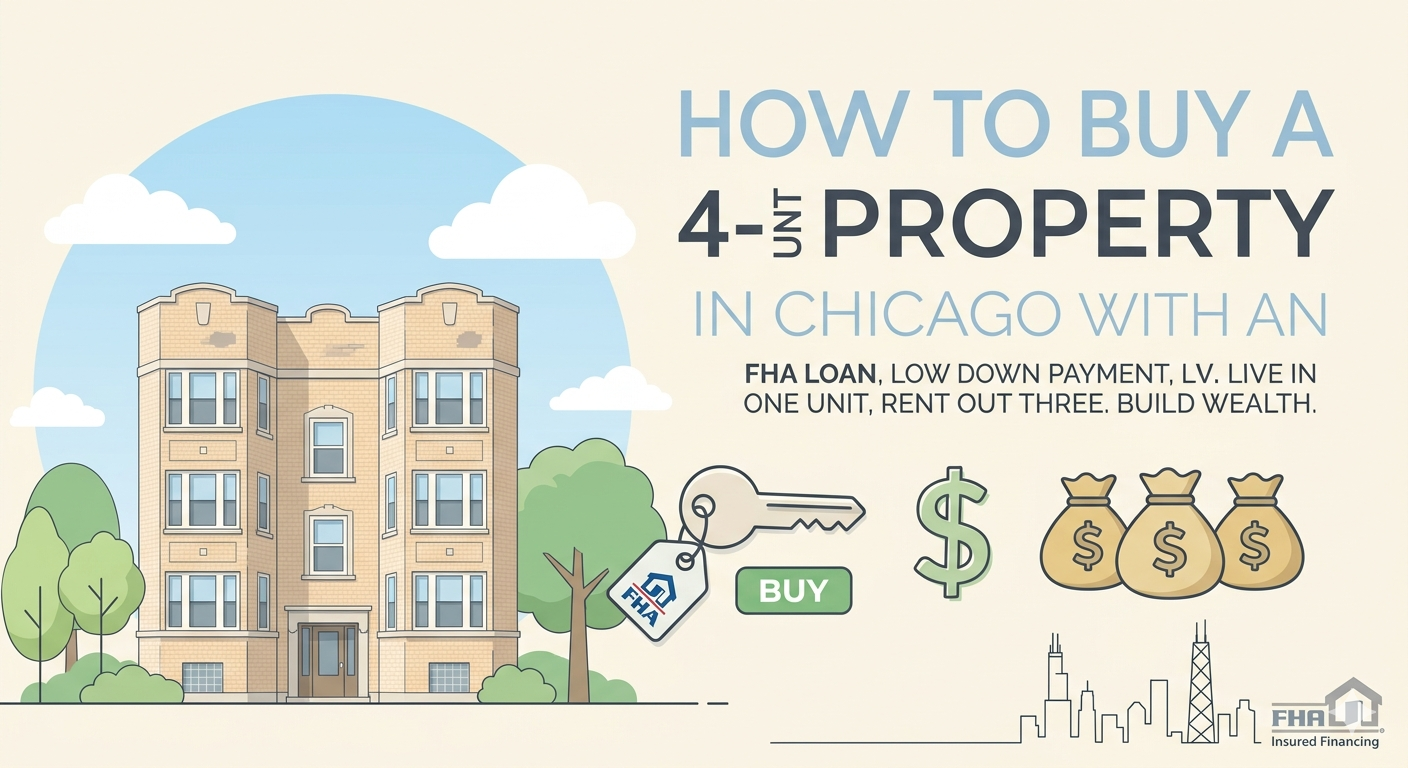
How to Buy a 4-Unit Property in Chicago with an FHA Loan
Buying a 4-unit property in Chicago with an FHA loan is one of the smartest ways to start house hacking, lower your housing costs, and build long-term real estate wealth. With just 3.5% down, you can purchase a multi-unit building, live in one unit, and rent out the other three to help cover your mortgage.
This guide explains exactly how it works in 2026, including FHA loan limits, requirements, and the strategy behind buying a four-unit property in Chicago.
Why Buy a 4-Unit Property in Chicago?
Chicago is one of the best cities in the country for multi-unit real estate investing because of its:
- Large inventory of 2–4 unit buildings
- Strong rental demand
- Affordable price points compared to other major cities
- Excellent public transportation
- Neighborhoods built around multi-family housing
A four-unit property allows you to maximize rental income while still qualifying for owner-occupied financing.
What Is an FHA Loan?
An FHA loan is a government-backed mortgage designed to help buyers purchase a home with a low down payment and flexible credit requirements.
Key benefits of an FHA loan include:
- 3.5% down payment
- Lower credit score requirements
- Competitive interest rates
- Allowed on 1–4 unit properties
Because FHA loans allow multi-unit purchases, they are perfect for house hacking.
2026 FHA Loan Limits for Chicago (Cook County)
FHA loan limits are higher for multi-unit properties, which makes buying a four-unit building possible with a low down payment.
| Units | 2026 Cook County FHA Loan Limit |
|---|---|
| 1 Unit | $541,288 |
| 2 Units | $693,063 |
| 3 Units | $837,720 |
| 4 Units | $1,041,138 |
These higher limits give buyers significant purchasing power for multi-unit properties.
How Much Do You Need to Buy a 4-Unit Property?
With an FHA loan, your down payment is only 3.5% of the purchase price.
For example, on a $1,000,000 four-unit building:
- Down payment: $35,000
- Loan amount: $965,000
Compared to conventional investment loans that often require 20–25% down, FHA financing dramatically reduces the upfront cost.
FHA Requirements for a 4-Unit Property
To qualify for an FHA loan on a four-unit property, you must meet several requirements.
1. Owner Occupancy
You must live in one of the units as your primary residence for at least 12 months.
2. Self-Sufficiency Test
For 3–4 unit properties, FHA requires that the property pass the Self-Sufficiency Test.
This means the total market rent from all units must cover the mortgage payment, including principal, interest, taxes, and insurance (PITI).
In simple terms: 75% of the total market rent must be equal to or greater than the full monthly mortgage payment.
This rule ensures the property can support itself financially.
3. Cash Reserves
FHA typically requires 3 months of cash reserves for 3–4 unit properties. This means having enough money set aside to cover three months of mortgage payments after closing.
4. Credit and Income
You’ll need:
- A qualifying credit score
- Stable income
- An acceptable debt-to-income ratio
The House Hacking Strategy
House hacking is the strategy of living in one unit while renting out the others to offset your housing costs.
With a four-unit property, you can:
- Live in one unit
- Rent out three units
- Use the rental income to pay most or all of your mortgage
This allows you to live affordably—or even for free—while building equity and cash flow.
Why a 4-Unit Property Is So Powerful
A four-unit building gives you the maximum benefit of owner-occupied financing while producing the most rental income allowed under FHA rules.
Benefits include:
- Maximum rental income under FHA
- Lower personal housing expenses
- Faster equity growth
- Strong long-term cash flow potential
- A clear path to future real estate investing
Chicago Neighborhoods Great for Multi-Unit Investing
Many Chicago neighborhoods are filled with 2–4 unit buildings, making them ideal for house hacking.
Popular areas include:
- Logan Square
- Avondale
- Irving Park
- Portage Park
- Rogers Park
- Humboldt Park
- Bridgeport
- Pilsen
These neighborhoods offer strong rental demand and a healthy supply of multi-unit properties.
Building Long-Term Wealth
Buying a four-unit property with an FHA loan is often the first step in a long-term real estate journey.
After living in the property for at least one year, you can:
- Refinance into a conventional loan
- Keep the property as a rental
- Repeat the process with another FHA or conventional purchase
This strategy allows you to steadily grow a portfolio of income-producing real estate over time.
Common Mistakes to Avoid
- Skipping the Self-Sufficiency Test calculation
- Underestimating repairs and maintenance
- Overpaying for a property that won’t cash flow
- Failing to budget for vacancies
- Not researching neighborhood rental rates
Avoiding these mistakes helps ensure your investment succeeds.
Frequently Asked Questions
Can I buy a 4-unit property with an FHA loan?
Yes. FHA loans allow the purchase of 1–4 unit properties with as little as 3.5% down, as long as you live in one of the units.
What is the FHA Self-Sufficiency Test?
For 3–4 unit properties, the rental income must be enough to cover the full mortgage payment. Generally, 75% of the total market rent must equal or exceed the monthly PITI.
How much do I need to put down on a 4-unit FHA property?
Just 3.5% of the purchase price, plus closing costs and required cash reserves.
Do I have to live in the property?
Yes. FHA requires you to live in one unit as your primary residence for at least 12 months.
Final Thoughts
Buying a 4-unit property in Chicago with an FHA loan is one of the most powerful ways to start building real estate wealth. With only 3.5% down, strong rental demand, and higher multi-unit loan limits, house hacking a four-unit building can help you reduce your living costs and create long-term income.
If you’re ready to explore multi-unit properties in Chicago, Contact Us to learn more about available buildings and start your house hacking journey.