


10 Weekend Projects to Increase Your Home's Value — Instantly
The right weekend projects to increase home value don't require permits, contractors, or a big budget — just smart choices and a free Saturday.
Most homeowners assume that increasing their property's value requires a full kitchen gut-renovation or a bathroom addition. But experienced Chicago real estate investors know a different truth: weekend projects to increase home value often deliver dramatically higher returns on time and money than large-scale remodels. A $200 can of front door paint can net $3,000 in perceived value. A $120 set of cabinet pulls can transform a buyer's first impression of a kitchen without touching a single cabinet.
Whether you're preparing to sell a Chicago two-flat, refinancing to pull equity for a house hack, or simply protecting your investment in neighborhoods like Pilsen, Logan Square, or Andersonville, these ten projects are the first moves smart investors make. According to the National Association of Realtors' Remodeling Impact Report, strategic cosmetic improvements consistently outperform gut renovations in dollars-returned-per-dollar-spent. Learn how the Chicago real estate market responds to each upgrade — and how to sequence your weekends for maximum ROI.
Why Weekend Projects to Increase Home Value Outperform Big Renovations
Before diving into the project list, it helps to understand why small improvements punch above their weight — especially in Chicago's competitive real estate market.
Full kitchen renovations cost $30,000–$80,000 in Chicago and return roughly 54–67 cents on the dollar at resale, according to Remodeling Magazine's annual Cost vs. Value report. Meanwhile, a cabinet hardware refresh at $200–$300 delivers the most visually impactful element of a kitchen update — new pulls and knobs — for a fraction of the cost. Buyers and appraisers respond to cleanliness, modernity, and perceived condition, not to the total dollars spent.
For Chicago house hackers and multifamily investors, this math matters even more. When you're managing multiple units, spending a weekend on each property's exterior before tenant turnover keeps vacancy low and rents competitive. The goal isn't perfection — it's the strategic appearance of a well-maintained, move-in ready home.
Zillow research finds that buyers in Chicago decide whether a home feels "right" within the first 30–60 seconds of a showing. The projects on this list are specifically designed to win those critical early moments — starting from the street.
10 Weekend Projects to Increase Home Value — Ranked by ROI
These ten projects are sequenced strategically: start exterior, move interior, finish with staging. Each can be completed in a single weekend with readily available materials from Home Depot, Menards, or Amazon.
-
1
Fresh Front Door Paint & New Hardware
Budget: $50–$200 | Estimated Value Added: $2,500–$5,000
The front door is the handshake of your home. A coat of high-quality exterior paint in a bold, current color — navy blue, forest green, matte black, or deep red — signals that a home is cared for and stylish. Swap the deadbolt, handle set, door knocker, and house numbers for matching brushed nickel or matte black hardware. In Chicago's Wicker Park and Lincoln Park, where buyers shop with their eyes first, a striking front door can be the difference between a showing and a pass.Highest ROI on the list -
2
Pressure Wash Exterior, Driveway & Walkways
Budget: $30–$80 (rental) or $150–$300 (service) | Estimated Value Added: $1,500–$3,000
Chicago winters are brutal on brick, concrete, and wood siding. Salt residue, grime, and algae accumulate invisibly until a pressure washer reveals the original surface beneath. Renting a pressure washer for a Saturday afternoon and cleaning the entire exterior — walls, driveway, sidewalk, back patio — can make a home appear thousands of dollars newer at zero material cost. This is one of the most impactful weekend projects to increase home value per hour of effort, and it's the ideal first step before any exterior painting or staining. -
3
Landscape Refresh — Mulch, Edging & Seasonal Plants
Budget: $100–$400 | Estimated Value Added: $2,000–$4,000
Fresh dark mulch in flower beds, cleanly edged walkways, and a few seasonal plants in pots create a polished curb presence that photographs exceptionally well for online listings. The NAR's Remodeling Impact Report consistently ranks standard landscaping upgrades among the top five projects by joy score and cost recovery. In Chicago bungalow neighborhoods like Beverly, Bridgeport, and Jefferson Park — where homes sit on smaller lots and the front yard is the primary outdoor space — landscaping quality is a direct signal of ownership pride. -
4
Garage Door Refresh
Budget: $50–$250 | Estimated Value Added: $1,500–$3,500
A garage door occupies up to 30% of the front elevation of a Chicago bungalow or two-flat. A faded, dented, or dated garage door drags down even a beautifully maintained home. Start by pressure washing and touching up paint. Add magnetic handles and decorative hinges for an instant carriage-house look — available at home improvement stores for $30–$60. If the door is badly damaged, a full panel replacement or new door install yields one of the highest cost-recovery rates in Remodeling Magazine's annual Cost vs. Value survey, often returning 95%+ in Chicago's market. -
5
Kitchen Cabinet Hardware Upgrade
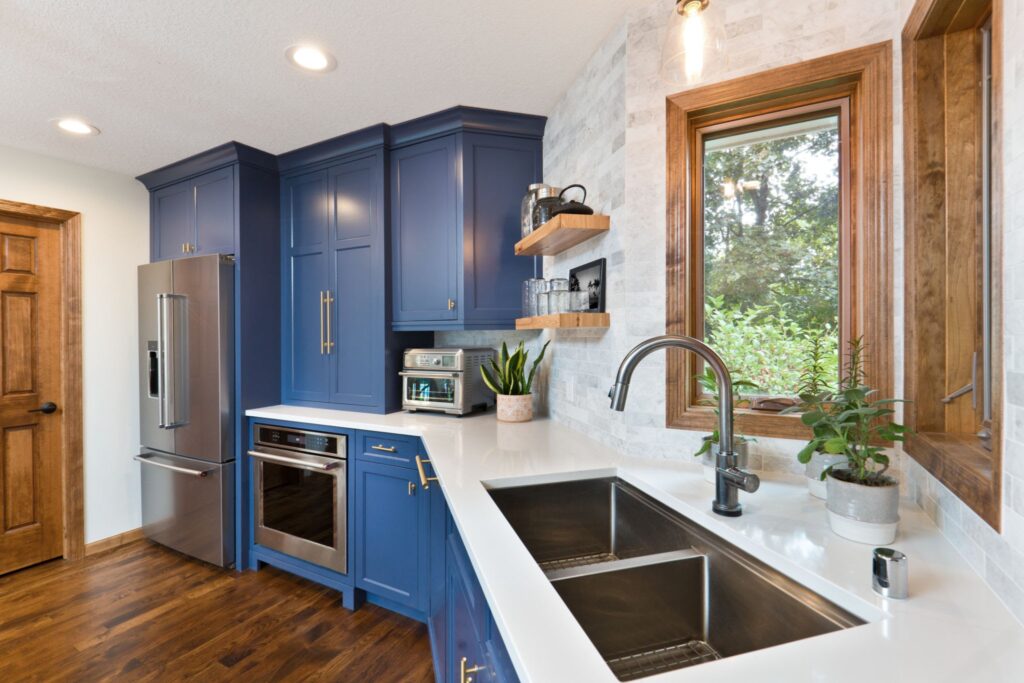
Budget: $100–$350 | Estimated Value Added: $2,000–$6,000
Cabinet hardware is the jewelry of a kitchen. Replacing dated brass pulls and knobs with modern brushed nickel, matte black, or unlacquered brass hardware is one of the highest-ROI weekend projects to increase home value available. A typical Chicago kitchen has 25–45 cabinet doors and drawers. At $5–$12 per handle, a complete hardware swap costs $150–$400 and takes one Saturday with a drill and a template jig. Buyers registering an impression of a kitchen overwhelmingly cite hardware and fixtures as part of their mental "modern vs. dated" evaluation — even if they can't articulate why. -
6
Bathroom Caulk, Grout & Fixture Refresh
Budget: $75–$250 | Estimated Value Added: $1,800–$4,000
Yellowed, cracked, or moldy caulk lines are one of the first things buyers and appraisers notice in a bathroom — and they're one of the easiest to fix. Remove old caulk with a caulk remover tool, clean the surface thoroughly, and apply fresh white or almond silicone caulk around the tub, shower pan, and sink. Regrout the shower tile if needed (a weekend project with the right tools). While you're at it, swap the faucet, towel bars, toilet paper holder, and mirror for a cohesive set in the same finish. A $200 bathroom fixture kit from a major hardware store can make a builder-grade bathroom feel intentionally designed. -
7
Install Modern Light Fixtures Throughout
Budget: $200–$700 | Estimated Value Added: $2,500–$5,000
Nothing ages a home faster than outdated light fixtures. Swapping a builder-basic ceiling fan for a modern semi-flush mount, replacing a dated chandelier with a drum pendant, or upgrading bathroom vanity bars from three-bulb Hollywood strips to linear modern fixtures dramatically shifts a room's perceived quality. Focus updates on the entryway, kitchen, primary bathroom, and dining area — the four spaces buyers photograph most often and spend the most time evaluating. Use LED bulbs throughout for a bright, clean light color (2700–3000K) that photographs well for listings. -
8
Interior Paint Refresh in Key Rooms
Budget: $100–$500 | Estimated Value Added: $2,000–$5,000
Fresh neutral paint is the single most effective thing you can do to make a home photograph beautifully and feel larger. In 2026, Chicago buyers favor warm, desaturated neutrals — greige tones, warm whites, and soft sage greens — over the stark whites and gray-blues of the previous decade. Focus painting efforts on the living room, primary bedroom, and kitchen if the cabinets won't be repainted. Consistent wall color throughout connected spaces makes a home feel cohesive and well-planned, which supports higher perceived value. Use an eggshell or satin finish for durability in living areas. -
9
Add Smart Home Devices
Budget: $150–$500 | Estimated Value Added: $1,500–$3,000
A Nest or Ecobee smart thermostat ($150–$250), a video doorbell ($100–$200), and a smart lock ($150–$300) are weekend installs that appeal strongly to Chicago's professional and millennial buyer pool. Beyond resale, smart thermostats reduce utility costs — a legitimate selling point for rental units in a house hack scenario. Smart devices also photograph well and support listing descriptions that use current buyer-preferred language: "tech-enabled," "energy-efficient," and "move-in ready." These devices are particularly valued in Lincoln Square, Roscoe Village, and the North Shore suburbs where tech-oriented buyers predominate. -
10
Deep Clean, Declutter & Stage
Budget: $0–$300 | Estimated Value Added: $3,000–$8,000
The highest-leverage "project" on this list costs the least money and requires the most honest effort. A professional-level deep clean — baseboards, grout, inside appliances, windows, light switches — removes the invisible film of normal living that buyers and appraisers register subconsciously as "worn." Decluttering every room to 60–70% of its current contents makes spaces read larger in photos and in person. Add fresh white towels in bathrooms, a bowl of fruit in the kitchen, a simple table centerpiece, and a few well-placed plants. According to the U.S. Department of Housing and Urban Development, presentation quality directly influences both appraisal outcomes and final sale prices.Best ROI per dollar spent
Complete exterior projects first (Projects 1–4), then move to interior hardware and fixtures (5–7), then paint (8), then smart devices (9), and finish with the deep clean and staging (10). This sequence ensures paint goes on after hardware holes are drilled, and staging happens after all construction mess is resolved.
Return on Investment: All 10 Weekend Projects Compared
Use this comparison to prioritize your available weekends and budget. Difficulty ratings assume basic DIY competence — a drill, painter's tape, and the willingness to watch a few YouTube tutorials.
| Project | Budget | Time | Est. Value Added | Difficulty |
|---|---|---|---|---|
| 1. Front Door Paint & Hardware | $50–$200 | 4–6 hrs | $2,500–$5,000 | Easy |
| 2. Pressure Wash Exterior | $30–$300 | 3–5 hrs | $1,500–$3,000 | Easy |
| 3. Landscape Refresh | $100–$400 | 4–8 hrs | $2,000–$4,000 | Easy |
| 4. Garage Door Refresh | $50–$250 | 2–4 hrs | $1,500–$3,500 | Easy |
| 5. Cabinet Hardware Upgrade | $100–$350 | 4–6 hrs | $2,000–$6,000 | Easy |
| 6. Bathroom Caulk & Fixtures | $75–$250 | 4–8 hrs | $1,800–$4,000 | Moderate |
| 7. Light Fixture Upgrades | $200–$700 | 6–10 hrs | $2,500–$5,000 | Moderate |
| 8. Interior Paint Refresh | $100–$500 | 8–16 hrs | $2,000–$5,000 | Easy–Moderate |
| 9. Smart Home Devices | $150–$500 | 2–4 hrs | $1,500–$3,000 | Easy |
| 10. Deep Clean, Declutter & Stage | $0–$300 | 8–16 hrs | $3,000–$8,000 | Easy |
All ten projects on this list are cosmetic and do not require building permits in Chicago or Cook County. If you're planning electrical work (hardwiring fixtures vs. swapping), or plumbing modifications, always check with the Chicago Department of Buildings before starting. Unpermitted work can complicate closings and appraisals.
How Chicago House Hackers Finance Home Improvement Projects
Most of the projects above cost under $600. But if you're tackling multiple units in a house hack or doing a full-property refresh before a cash-out refinance, it helps to understand your financing options.
HELOC — Home Equity Line of Credit
If you have built equity in your Chicago property, a HELOC gives you a revolving credit line to draw from as needed — perfect for rolling home improvement projects across multiple weekends or units. You only pay interest on what you use, and rates are typically lower than credit cards or personal loans. Many Chicago investors use a HELOC specifically to fund value-add improvements before a refinance, then pay the line down with the cash-out proceeds.
203(k) Rehabilitation Loan
If you're purchasing a property that needs more than cosmetic work, an FHA 203(k) loan wraps the purchase price and renovation costs into a single mortgage. While it requires a licensed contractor for structural work, the standard 203(k) covers electrical, plumbing, roofing, and kitchen/bath renovations — making it a powerful tool for Chicago investors buying fixer-uppers in up-and-coming neighborhoods.
Cash — The Simplest Option for Weekend Projects
For the ten projects on this list, cash is often the right answer. At $50–$700 per project, these upgrades are accessible without borrowing. Build a monthly improvement budget — even $200/month — and you can complete all ten projects across a single year while your property's value climbs steadily. Pair this strategy with a Chicago market analysis to identify which upgrades are most valued in your specific neighborhood.
Chicago-Specific Tips Before You Start Any Weekend Project
Chicago's real estate market has characteristics that affect which projects deliver the most value in which neighborhoods. Here's what Lori's clients have learned from doing this across dozens of properties.
Know your buyer or tenant demographic. A gut-renovated unit in Pilsen with exposed brick and a matte black kitchen will command top rent from creative professionals. A well-maintained, neutral-toned unit in Edison Park or Norwood Park appeals to families who prioritize schools and condition over trendy finishes. Match your upgrades to who will actually pay for them.
Timing matters for exterior projects. Chicago's short outdoor season means landscaping and exterior painting are best completed in May–September. Plan your exterior weekend projects for spring or early summer so they're fresh when you list or photograph the property. Fall pressure washing before winter prep is also a strong habit that protects surfaces long-term.
Chicago brick requires special care. Most Chicago bungalows and two-flats are brick construction. Do not pressure wash brick above 1,500 PSI — it can damage mortar and cause water infiltration. If your brick has major staining or mortar gaps, consult a masonry specialist before power washing. Tuckpointing (repairing mortar joints) is a project that significantly impacts appraisal value and structural integrity, though it typically requires a professional.
- Logan Square — Buyers expect modern kitchens; cabinet hardware and fixtures make the biggest impact
- Bridgeport & McKinley Park — Curb appeal and landscaping carry significant weight; these are community-proud neighborhoods
- Andersonville — Smart home features and energy efficiency are strong differentiators
- Pilsen — Authentic finishes preferred; avoid over-renovation; focus on clean, maintained condition
- Rogers Park — Bathroom refreshes and light fixtures have outsized impact given the age of housing stock
Weekend Project Readiness Checklist
Before you start your first weekend project, run through this checklist to make sure you're set up for efficient, effective work.
- Walk the full exterior with fresh eyes — photograph everything as if you're a buyer seeing it for the first time
- Identify which of the 10 projects will have the most visible impact given your specific property and neighborhood
- Research comparable listings in your neighborhood to understand what finishes buyers expect
- Consult the ROI table above to prioritize budget allocation across your available weekends
- Order hardware and fixtures online 1–2 weeks in advance — don't let shipping delays kill your momentum
- Gather tools: drill, level, painter's tape, drop cloths, caulk gun, pressure washer (rented), cleaning supplies
- Schedule projects in exterior-first order: pressure wash → landscaping → front door → garage door
- Complete interior projects room by room: hardware → fixtures → paint → staging
- After all projects are done, hire a professional photographer or rent a camera on a bright, overcast day for listing photos
- Contact Lori Wyatt to assess market positioning and recommended listing price after improvements are complete
Frequently Asked Questions
Ready to Maximize Your Chicago Property's Value?
Lori Wyatt helps Chicago homeowners and investors identify the highest-ROI improvements for their specific neighborhood, market position, and investment goals — before listing or refinancing.
Lori Wyatt
Chicago real estate investor & licensed agent. Specializes in house hacking, multifamily acquisition, and creative financing strategies across Chicagoland. Learn more →