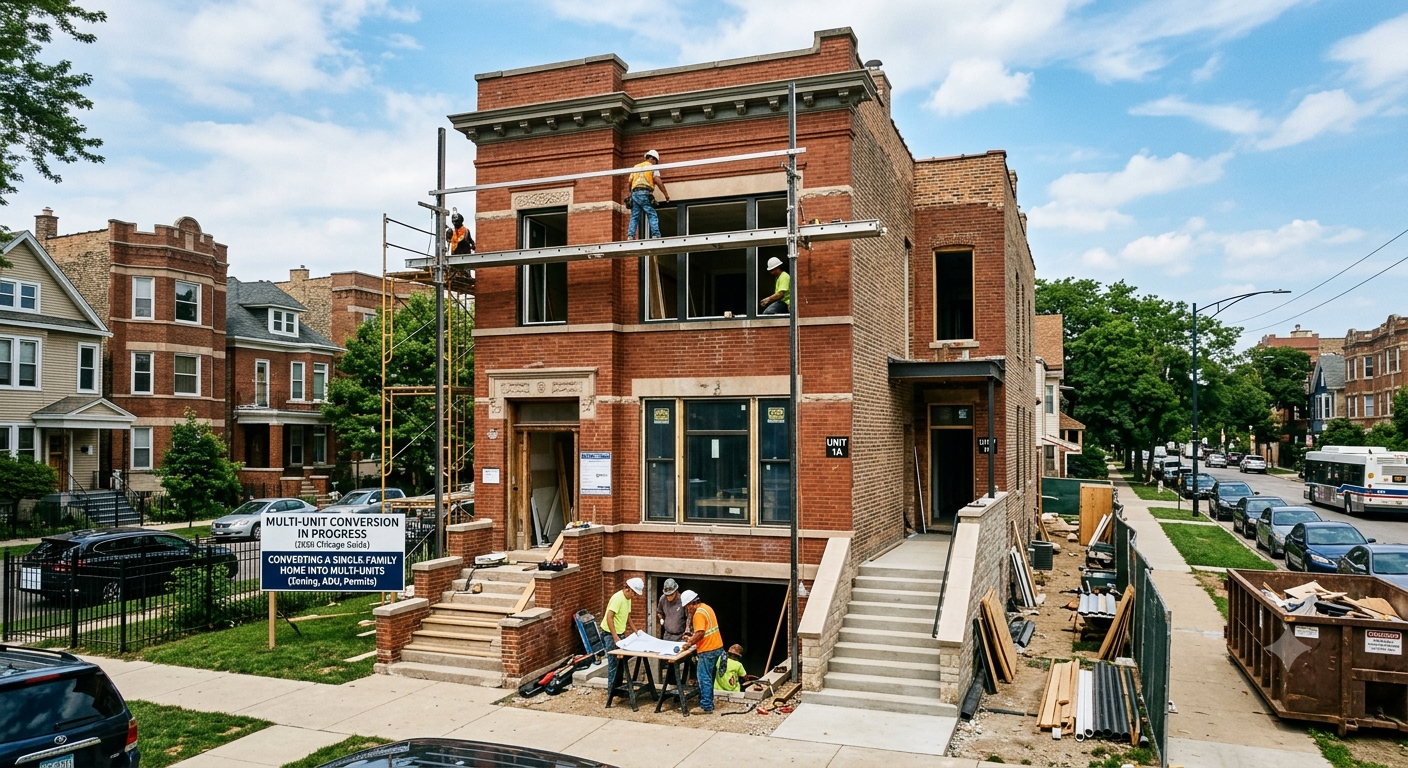
Cost to Convert Single Family to Multi Unit in Chicago
Cost, Zoning Rules, Permits & ROI Explained
If you’re planning to convert a single-family home into a multi-unit property in Chicago, understanding zoning laws, costs, and permits is essential. Chicago has strong housing regulations, but many properties still qualify for legal conversion depending on zoning classification.
This guide explains everything you need to know about converting a single-family home into a duplex or multi-unit property in Chicago in 2026.
Is It Legal to Convert a Single Family Home in Chicago?
Yes—but it depends on zoning.
In Chicago, property conversions are regulated under the city’s zoning ordinance. A single-family home can only be converted into a duplex or multi-unit building if:
- The property is zoned for multi-unit use (RT, RM, or higher)
- You obtain proper building permits
- The structure meets building and safety codes
- Parking requirements are satisfied (varies by zone)
Always verify zoning first before planning any renovation.
Chicago Zoning Rules for Property Conversion
Chicago zoning is divided into several residential categories:
- RS (Single-Family Residential) – Conversion NOT allowed
- RT (Two-Flat / Townhouse Districts) – Duplex or multi-unit conversion may be allowed
- RM (Multi-Unit Residential) – Full conversion allowed
- DX / Downtown Zones – High flexibility for multi-unit use
You can check zoning through the official Chicago zoning map: City of Chicago Zoning Map
Cost to Convert Single Family to Multi Unit in Chicago
Conversion costs depend on property condition and size.
Typical cost ranges:
- Light renovation (existing layout): $50,000 – $120,000
- Moderate conversion (new unit creation): $120,000 – $250,000
- Full structural conversion: $250,000 – $500,000+
Main cost factors:
- Plumbing & electrical separation
- Additional kitchens/bathrooms
- Fire safety compliance
- Permits & inspections
- Contractor labor
Step-by-Step Conversion Process
1. Check zoning classification
Confirm if your property allows multi-unit use.
2. Hire a licensed architect or contractor
You need plans that meet Chicago building code.
3. Apply for permits
Submit conversion plans to the Chicago Department of Buildings.
4. Structural modifications
Add separate entrances, utilities, and living spaces.
5. City inspection approval
Final inspection ensures code compliance.
6. Obtain occupancy certification
You can legally rent or sell units.
ROI and Rental Income Potential
Converting a single-family home into a multi-unit property can significantly increase income.
Example:
- Single-family rent: $2,500/month
- Duplex conversion: $4,200–$5,500/month total rent
- Triplex: $6,000–$8,000/month+
Benefits:
- Higher cash flow
- Increased property value
- Better long-term equity growth
Common Mistakes to Avoid
- Ignoring zoning restrictions
- Starting renovation without permits
- Underestimating construction costs
- Not planning for parking requirements
- Hiring unlicensed contractors
When Conversion Makes Sense
This strategy works best if:
- Property is in RT or RM zoning
- You plan long-term rental income
- The home has a large lot or basement potential
- You are targeting cash-flow investment strategy
Useful Tools & Resources
- Chicago Flip ROI Calculator: /calculate-flip-profit-chicago/
- Chicago housing investment guides (internal link opportunity)
FAQ
Is it hard to convert a single-family home in Chicago?
It depends on zoning and structure. RT and RM zones are easier to convert than RS zones.
Do I need a permit to convert a house into a duplex?
Yes. Chicago requires building permits and inspections for all conversions.
How long does the conversion process take?
Typically 3–9 months depending on project size and permit approval.
Is converting a home profitable in Chicago?
Yes, especially in high-demand rental areas where multi-unit properties generate higher cash flow.