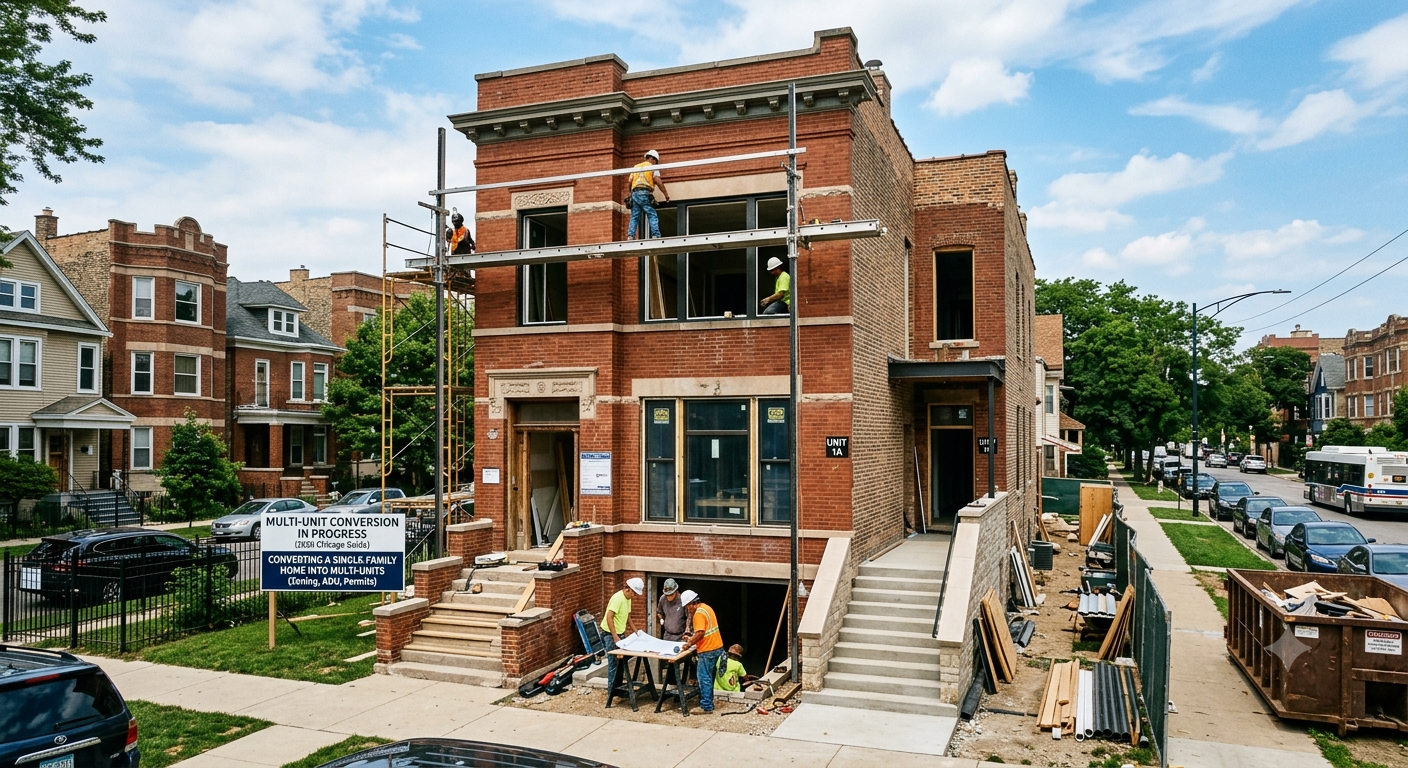
If you’re planning a property flip in Chicago, one of the most important steps before buying is knowing your potential profit.
This House Flip Profit Calculator helps you estimate:
- 💰 Total profit from a flip
- 📊 Return on investment (ROI)
- 🏚 Rehab and renovation impact
- ⏳ Holding and selling costs
Whether you’re a beginner or experienced investor, this tool helps you avoid overpaying and underestimating expenses.
📊 Why Calculate Flip Profit Before Investing?
Many investors lose money not because the deal is bad—but because the numbers were wrong.
Common mistakes include:
- Underestimating rehab costs
- Ignoring holding costs (taxes, insurance, utilities)
- Overestimating resale value (ARV)
- Forgetting selling fees and commissions
This calculator helps you avoid those mistakes before you commit.
🧮 House Flip Profit Formula
💡 Net Profit Formula
Net Profit = ARV − (Purchase Price + Rehab Costs + Holding Costs + Selling Costs)
📈 ROI Formula
ROI = (Net Profit ÷ Total Investment) × 100
🧾 What Costs Should You Include?
🏚 Purchase Price
The price you pay for the property.
🔨 Rehab Costs
Includes:
- Repairs
- Renovations
- Materials
- Labor
⏳ Holding Costs
While you own the property:
- Property taxes
- Insurance
- Utilities
- Loan interest
🏡 Selling Costs
When you sell:
- Realtor commission (5–6%)
- Closing costs
- Staging or marketing
🧮 House Flip Profit Calculator (Example)
Let’s break down a real Chicago-style flip:
- Purchase Price: $220,000
- Rehab Costs: $40,000
- After Repair Value (ARV): $320,000
- Holding Costs: $10,000
- Selling Costs: $25,000
💰 Step 1: Total Investment
$220,000 + $40,000 + $10,000 + $25,000 = $295,000
💰 Step 2: Net Profit
$320,000 − $295,000 = $25,000 profit
📊 Step 3: ROI
($25,000 ÷ $295,000) × 100 = 8.47% ROI
⚠️ Is This a Good Flip in Chicago?
In most cases, investors in Chicago aim for:
- 🔥 10%–20% ROI minimum
- 🔥 Strong deals: 20%+ ROI
- ⚠️ Risk zone: Below 10%
👉 In this example, the deal is borderline and may not be worth the risk unless you can reduce rehab or purchase price.
🧠 The 70% Rule (Important for Investors)
A common rule in house flipping is:
Max Purchase Price = 70% of ARV − Repair Costs
Example:
- ARV: $320,000
- Repairs: $40,000
👉 Max Purchase Price:
(320,000 × 0.70) − 40,000 = $184,000
If you pay more than this, your profit margin becomes very tight.
📍 Chicago House Flipping Market Insight
The Chicago market is:
- 🏘 Highly neighborhood-dependent
- 📉 Some areas have slower appreciation
- 🔨 Rehab-heavy opportunities in older housing stock
This makes accurate calculation even more important before buying.
🧮 Use This Calculator Before Every Deal
Before making an offer, plug in:
✔ Purchase price
✔ Rehab estimate
✔ ARV (After Repair Value)
✔ Holding costs
✔ Selling costs
👉 If ROI is too low, walk away or renegotiate.
❓ Frequently Asked Questions
What is a good ROI for house flipping?
Most investors aim for 10%–20% ROI, depending on risk level.
What is ARV?
ARV (After Repair Value) is the expected market value after renovations.
What is the biggest mistake in house flipping?
Underestimating rehab costs and overestimating resale value.
Can I flip houses with low capital?
Yes, but you must be extremely accurate with numbers and avoid low-margin deals.



 © 2026 Midwest Real Estate Data, LLC (MRED). The listing information is provided exclusively for consumers’ personal non-commercial use, and may not be used for any purpose other than to identify prospective properties consumers may be interested in purchasing. The data is deemed reliable but is not guaranteed by MTP or MRED. Listings courtesy of Midwest Real Estate Data, LLC as distributed by MLS GRID as of Friday, April 10th, 2026 at 05:20:28 AM. All data is obtained from various sources and has not been, and will not be, verified by broker or MRED. MRED supplied Open House information is subject to change without notice. All information should be independently reviewed and verified for accuracy. Properties displayed may be listed or sold by various participants in the MLS as established by the applicable MLS Governing Documents.